
– creative workshop
nodelab
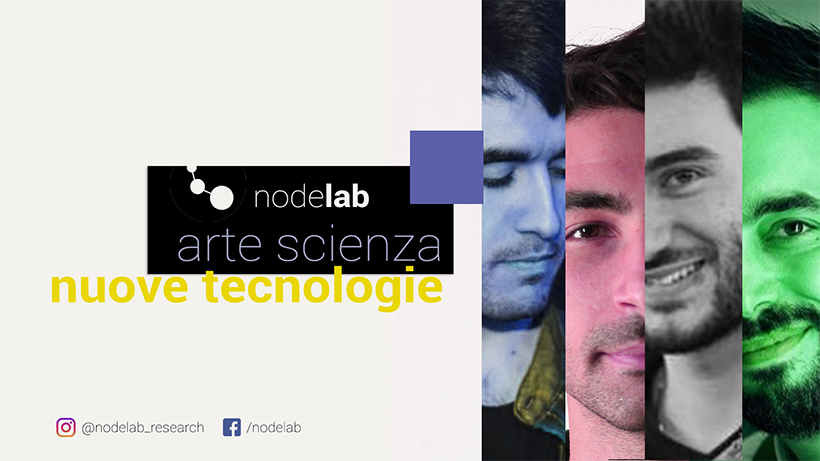
Grillo Design Studio is proud to present Nodelab, an initiative created to combine creativity, digitization and ecological transition.
Thanks to the support of the TOCC call, which promotes digitization and sustainability for creative bodies, Nodelab represents an innovative platform that revolves around three main assets: a physical laboratory, a video course platform, and a catalog of online courses dedicated to art and new technologies.
In this article, we will explore how Grillo Design Studio developed this project and its impact in the world of art and culture.
Client
Elegant Themes
Dates
Jan, 2019
Duration
3 Months
Focus
Audience Growth
Innovation & Creativity for Digitization and Ecological Transition.
Vivamus magna justo, lacinia eget consectetur sed, convallis at tellus.
Vestibulum ante ipsum primis in faucibus orci luctus et ultrices posuere cubilia Vivamus magna justo, lacinia eget consectetur sed, convallis at tellus.
Vestibulum ante ipsum primis in fauci
%
Audience Growth
Return Visitor Growth
Revenue Boost
Solution
– The Challenge
Challenge & Solution
In the landscape of digital innovation and sustainability, Nodelab emerges as a revolutionary project that combines technology, creativity and ecological commitment.
Created under the leadership of Grillo Design Studio and funded through the TOCC (Transition and Digitization for Creative and Cultural Bodies) call for proposals, Nodelab represents a new development model for the arts and culture sector, responding to the needs of digital transformation and ecological transition.
The project is developed on three main assets: a physical laboratory, a video course platform, and an online course catalog.

1. The Physical Laboratory (Nodelab)
The beating heart of Nodelab is the physical lab, a creative and technological space located in Guidonia Montecelio that serves as a meeting point for artists, creatives and innovators.
The lab is equipped with state-of-the-art digital fabrication tools, including 3D printing devices, 3D digitizing scanners, and augmented reality (AR) and virtual reality (VR) tools.
With support from the TOCC grant, the lab is designed to minimize environmental impact by using sustainable materials and promoting a circular economy.
Here, artists can experiment with new technologies, develop innovative projects and collaborate on sustainability-related initiatives.
2. The Videocourse Platform
The second pillar of Nodelab is a video course platform designed to offer online education on art, new technologies and sustainability.
This platform, developed entirely by Grillo Design Studio, gives users access to high-quality courses, with content ranging from augmented and virtual reality to the digitization of artistic and cultural heritage.
The video courses are designed for both emerging artists and professionals in the cultural sector, with the aim of providing practical tools to meet the challenges of digitization and ecological transition.
3. The Video Course – Digitization and Art.
One of the first video courses available on Nodelab is dedicated to the digitization of art and its integration with emerging technologies.
The course explores techniques such as 3D scanning, digital modeling, and the use of augmented reality to create new art experiences.
Participants learn not only how to use these technologies, but also to understand their impact on the arts sector, particularly in terms of sustainability.
Through its innovative teaching approach, the course provides an opportunity for creatives to gain practical skills to bring art into the digital future.

The Importance of the TOCC Call.
The realization of Nodelab was possible thanks to the TOCC grant, which enabled Grillo Design Studio to obtain the necessary funds to implement advanced technologies and promote the ecological transition in the arts sector.
This support ensured the creation of a sustainable platform with high cultural value, making Nodelab a role model for digital innovation in the art world.
Conclusion
Nodelab is not just a technological innovation project, but a vision for the future of art and culture.
Thanks to the efforts of Grillo Design Studio and the support of the TOCC call, Nodelab offers concrete tools to transform the way we live, produce and enjoy art, putting sustainability and digitization at the center.
This project is an important step forward in creating a more digital and sustainable future for the creative sector.
